Sustainability at Greenhost
Mercedes

Sustainability is a fundamental pillar of who we are.

On a global scale, the Internet and the ICT sector are responsible for significant energy consumption and environmental impact. We are part of that industry, and we believe that comes with responsibility. We actively work to reduce our negative impact wherever we can. This starts with hosting, as it accounts for the majority of our energy consumption.

But green hosting at Greenhost means more than just green energy and CO₂ compensation: from the start, we have aimed at using as little energy as possible, and this is still crucial in every decision we make. By openly publishing our Sustainability Report, we wish to showcase how Greenhost isn't just a name. The information on this page is derived from our internal policies and the full sustainability report, as a PDF


This page will guide you - in a virtual electric car - through the measures Greenhost takes to be responsible and sustainable

As with every good road trip, we will make a few stops along the way:

  • Three Rs is where you can see what we do to Reduce, Reuse and Recycle.
  • Energy is where you will learn about our electricity consumption, both in our data centres and at our office.
  • Food showcases our efforts to adapt our office menu in order to reduce emissions.
  • Transportation covers our greenhouse gas emissions related to traveling; how we compensate these emissions; and gives you information on how, where and why we travel.
  • Conclusion, the final stop of our journey, gives you references, resources and reading material about our choices and our goals.
Three Rs

At Greenhost we practice the three "R" words of waste management: Reduce, Reuse, and Recycle.

Reduce

We do our best to only buy what we really need.

For spare hardware, we keep very limited local stock. Instead, we have hardware partners who keep sufficient spare hardware in stock. As this stock is shared between many customers, this limit the need for local spare hardware. As hardware becomes outdated in 5–10 years, this means we can limit our hardware waste.

As we are a small organisation, with a mixed in-person and virtual office setting, we have a fluctuating number of people physically in the office. This makes it hard to predict the required food and lunch supplies. For this reason, we choose to be in a building together with other companies. There is a shared facility providing vegetarian and vegan lunches.

Reuse

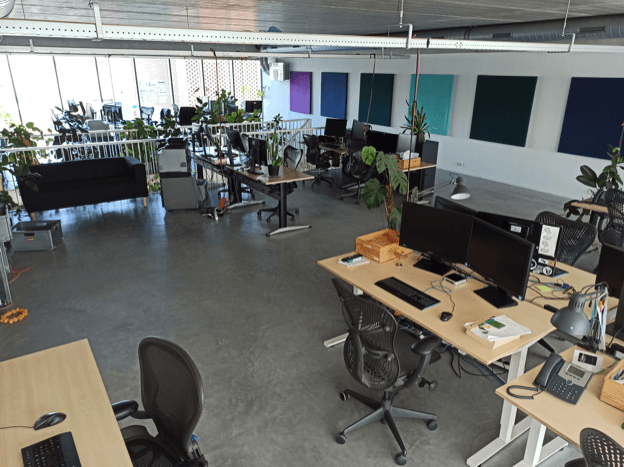
We try to buy second-hand as much as we can: our office is pretty much Recycle Central. All desks and office chairs are pre-owned. Sometimes we buy new, like recently we did invest in a high-efficiency fridge, as we believe for appliances the sustainability trade-off favored buying new.

Our second-hand furniture
Our second-hand furniture.

Recycle

At the office, we have dedicated places for paper, plastic and glass waste, which the Amsterdam municipality collects.

We use all the recycling options available in Amsterdam. This means that we separate paper, plastic, and glass waste in our office. Additionally, we try to give away as much of our discarded electronics as possible. For example, we donated hardware to Stichting de Leeuw Kyiv, where those servers now serve in hospitals in Ukraine.

For hardware that cannot be reused anymore, we work with certified recycling companies for responsible disposal and recycling.

Energy

In 2017, Greenpeace estimated that the IT sector is responsible for 7 percent of global electricity consumption.

At our Data Centres

Iron Mountain (formerly Evoswitch) located near Amsterdam is our main infrastructure provider. We host over 20,000 websites on our own hardware colocated in the data centre.

Iron Mountain has a strong sustainability focus. On top of that, they have a very efficient data centre with a low PUE. We selected this data centre as they were a forerunner in sustainable infrastructure.

We are working with partners to move towards a newer and more sustainable data centre model. This is expected to provide an improvement in 2026.

Amsterdam (2024)

Energy Sources

100% Dutch wind energy

Energy Usage

130.000 kWh

What an average Amsterdam household uses in 40 years.[1].

Energy Efficiency

Very Efficient -PUE[2] 1.2

Energie verbruik
Effectiviteit
(PUE)
Datacenter
infrastructuur
Efficiëntie (DCiE)
Niveau van efficiëntie
1.2 83% Zeer efficiënt
1.5 67% Efficiënt
2.0 50% Gemiddeld
2.5 40% Inefficiënt
3.0 33% Zeer Inefficiënt

East Asia (2024)

Energy Sources

No information available.

Energy Usage

3,000kWh

What an average Amsterdam household uses in 1 years. [1]

Energy Efficiency

Efficient -PUE[2] <1.6

Energie verbruik
Effectiviteit
(PUE)
Datacenter
infrastructuur
Efficiëntie (DCiE)
Niveau van efficiëntie
1.2 83% Zeer efficiënt
1.5 67% Efficiënt
2.0 50% Gemiddeld
2.5 40% Inefficiënt
3.0 33% Zeer Inefficiënt

Miami (2024)[3]

Energy Sources

No information available

Energy Usage

27.000 kWh

What an average Amsterdam household uses in 8 years. [1]

Energy Efficiency

Average -PUE[2] <1.6

Energie verbruik
Effectiviteit
(PUE)
Datacenter
infrastructuur
Efficiëntie (DCiE)
Niveau van efficiëntie
1.2 83% Zeer efficiënt
1.5 67% Efficiënt
2.0 50% Gemiddeld
2.5 40% Inefficiënt
3.0 33% Zeer Inefficiënt
  • [1]: The yearly average electricity consumption of an Amsterdam household is estimated at 2990kWh according to City Centre Retreat
  • [2]: PUE is a ratio that describes how much energy is used by the actual computing equipment at a data centre, versus the energy consumption of overhead, e.g. cooling.
  • [3]: Decommissioned in 2025

Food

We have a hybrid office setup. From the office, we provide vegetarian and vegan lunches for employees through our partner. In the case that we provide food directly, for example for events, we follow our procurement policies.

Vegan/vegetarian

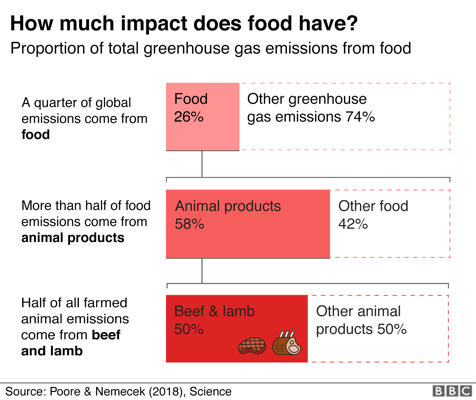
Since the simplest way to reduce our emissions is to not eat meat, we provide vegetarian and plant-based lunch options.

Image source: BBC article on how plant-based diets can fight climate change.

Food procurement policy

We have a policy of buying seasonal, local, organic and sustainably grown food. That's a lot of adjectives but it reduces out footprint a lot. It means:

Seasonality

Seasonal foodstocks do not rely on heated greenhouses, which rely on heating, lighting and literally producing CO2 by burning fossil fuels for crops to grow "efficiently", and cause light pollution, affecting eg nocturnal wild-life.

If you live in the Netherlands too, you can find out which seasonal fruits and vegetables are available on the Voedingscentrum calendar.

Locally sourced

We try to limit the distance our food travels. Most transport is still done conventionally, consuming fossil fuels. Some fruits and vegetables are even transported by airplane.

Organic

As the song goes..

Hey farmer, farmer
put away that DDT now
give me spots on my apples
but leave me the birds and the bees
Please!
Big Yellow Taxi (1970) by Joni Mitchell

We've known for a long time that we need bees to pollinate our fruits and vegetables. There have been massive bee die offs for years. Which is of course very bad in itself, but it's still just an obvious superficial effect. Pesticides and in particular neonicotinoids are responsible for many other insects dying too, which has a real effect on biodiversity, for instance birds rely on insects for food.

Sustainable

We don't use products from greenhouses, or purchase products from areas with deforestation.

Transportation

Balancing between commitment to community and responsibility to nature.

Besides commuting every weekday to the office, we travelled to attend conferences and other activities around our internet freedom and human rights projects. It is important to stay in touch with our community and (prospective) funders so we can do more work promoting human rights and internet freedom.

CO2 Emissions (2024)

13 tonnes

In 2024, a total of 13 tons of CO2 were produced due to our travel activities. This is almost the same amount as what two people living in the Netherlands produce over a year[3].

Compensations

To compensate those travelling emissions, we invested planted new trees to compensate. In addition we invested an equal amount in renewable energy, as we believe investment in structural solutions in essential.

Trees for All

CO2 offset

We invested in trees to offset the CO2 emission trees through Trees for All.

Meewind

€€

Of all our offsets, we invest an equal amount in Euro; supporting the energy transition though Meewind for structural change.

Commuting to the office

During 2024, people work from home or from the office. Commute to the office is by public transport or bike. Greenhost is not compensating commute by car, nor providing parking spots for its employees. By doing so we are stimulating our employees to use sustainable modes of transportation.

Conferences

Even though physically attending a conference is not a very sustainable practice, we think it is very important that we do so. We attend conferences to exchange knowledge and experiences with others. We also promote Greenhost and communicate with partners in the human rights community. We think that if we don't attend these conferences, we cannot do work that is important for protecting human rights and internet freedom.

To keep it as sustainable as possible, we have implemented the policy that if a place is reachable by train in less than one day of travel, we take the train instead of flying. If flying is the only feasible mode of transport, direct flights are preferred over connecting flights.

Internet freedom projects

We travel to participate in projects regarding digital security and human rights. Through these travels we share knowledge, support partnerships and support development of open source applications. Of course afore mentioned policies apply for these travels as well.

Conclusion

We do our best to reduce our footprint and are making continous efforts to improve. We hope you agree.

We want to be able to provide more data: in some cases, we weren't able to acquire any. We also wish to improve on different fronts: notably, we're not happy we don't know the impact of our data centres besides our Amsterdam one. In all honesty, while we'll keep trying, we aren't optimistic about that changing in the foreseeable future. Options that satisfy our specifications are limited, and if we do find a better option, relocating infrastructure also holds a cost that we need to be sure that the migration will mitigate. For now, we do our best to make rough estimates and compensate above that estimate.

We hope that you enjoyed reading our sustainability report, and that you found the information you were looking for. We are very interested to hear what you think about this sustainability report. If there is anything more you would like to know, or information that is unclear or missing, please get in touch.